
3D printing technology is reshaping the automotive manufacturing industry in a range of ways, from parts production and mold making to shortened R&D cycles, lightweight integrated design, and even broader shifts across the industrial supply chain. While the technology still faces real limitations when it comes to large-scale mass production, its value as an auxiliary tool in vehicle development has become widely recognized across the industry. Below is a detailed look at how 3D printing is being applied today, along with an honest account of where it still falls short.
Component Manufacturing
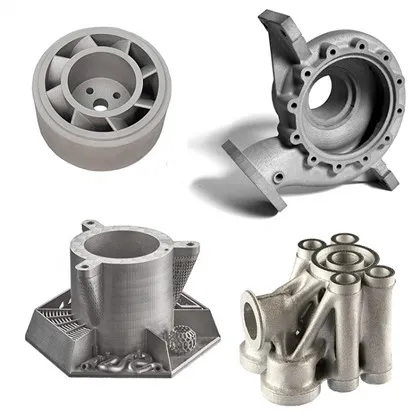
3D printing is now used to produce both plastic and metal automotive components. Plastic 3D printing technology is well suited to non-critical parts such as interior control panels and dashboard components, where dimensional tolerances are less demanding and design iteration matters more than raw mechanical strength. Metal 3D printing, by contrast, is increasingly applied to complex parts such as engine blocks and cylinder heads - components with intricate internal geometries that are difficult or expensive to produce through conventional casting.
One notable example is a patternless mold-free casting technique that has been used to shorten the production cycle for engine components from the traditional three-to-four months required for tooling down to as little as two weeks, while cutting costs by anywhere from several hundred thousand to several million yuan. This kind of gain is possible because the technology bypasses the need to design, machine, and validate a physical mold before a single part can be produced - a step that traditionally consumes the majority of lead time in engine component development.
That said, the technology's limitations are just as important to understand as its strengths. Core systems such as the powertrain, suspension, battery pack, tires, wheels, wiring harnesses, electric motors, and windshields still rely almost entirely on traditional manufacturing methods. 3D printing cannot directly produce precision electronic components such as wiring, circuit boards, or sensors - these remain firmly in the domain of established electronics manufacturing processes, and there is no indication that additive manufacturing will displace them in the near term. In practice, this means 3D printing today functions as a complement to, rather than a replacement for, conventional automotive manufacturing.
Mold and Tooling Production
One of the clearest advantages of 3D printing in an automotive context is rapid prototyping for molds and tooling. Because the technology builds parts directly from computer graphic data without requiring machining or a physical mold, it can generate components of almost any shape on demand. This dramatically shortens the development and production cycle for automotive molds compared to conventional methods.
Where traditional mold development can take several months - encompassing design, tooling fabrication, trial runs, and correction cycles - 3D printing can compress that same timeline down to a matter of weeks, while simultaneously lowering R&D costs. This speed advantage compounds across a vehicle program: a mold that can be iterated in days rather than weeks allows engineering teams to test more design variations before committing to expensive production tooling.
Looking further ahead, many in the industry view 3D printing as a potential future direction for automotive mold manufacturing more broadly. By reducing dependence on traditional stamping and forging processes for certain applications, additive manufacturing could help push mold production toward a more efficient, lower-cost model - particularly for low-volume or highly customized tooling runs where the upfront cost of conventional dies is hard to justify.
Shortened R&D Cycles
Automakers are leveraging the rapid-prototyping strengths of 3D printing to significantly compress the time needed for exterior design validation and model production. Where new vehicle development cycles once routinely exceeded two years, many programs have now been compressed to under a single year. This acceleration is not happening in a vacuum - it is a direct response to intensifying market competition. In 2014 alone, 328 new vehicle models were launched in the Chinese market, and that level of competitive pressure has pushed manufacturers to adopt 3D printing as a way to boost R&D efficiency and get new designs to market faster.
Beyond raw speed, 3D printing also supports the simultaneous, synchronized development of product design and manufacturing processes. Rather than working through a strictly sequential design-then-build workflow, engineering and manufacturing teams can iterate in parallel, which reduces delays caused by back-and-forth revisions. Rapid prototyping also allows design flaws to surface earlier, lowering overall development risk before a design is locked in for tooling.
Lightweighting and Integrated Design
Structural optimization is one of the areas where 3D printing offers benefits that are difficult to replicate with traditional manufacturing. Components that once required assembling a thousand or more individual parts can, in some cases, be consolidated into just a few dozen printed parts. When combined with composite materials such as carbon fiber, this kind of part consolidation can produce a meaningful reduction in overall vehicle weight.
Vehicles that incorporate 3D-printed structural elements as part of an integrated design approach benefit from fewer assembly steps and, in many cases, improved overall performance - weight reduction directly supports better efficiency and handling characteristics. This design paradigm is increasingly seen as pointing toward a new direction for automotive manufacturing generally, one that may push the broader industry toward more efficient and more environmentally sustainable production methods over time, as consolidated designs typically also reduce material waste and simplify end-of-life disassembly.
Transformation of the Industrial Supply Chain

Traditional automotive production depends on complex, often global supply chains, with components sourced from multiple countries before final assembly. 3D printing technology has the potential to change that model by allowing design, sourcing, manufacturing, sales, and recycling to be concentrated within a single region, reducing dependence on long-distance logistics.
A notable illustration of this shift is a concept vehicle that achieved localized production through 3D printing, cutting down on the cross-border shipping costs and lead times that typically come with a globally distributed supply chain. More broadly, 3D printing supports small-batch, highly customized production, which aligns well with the industry's broader shift from large-scale standardized manufacturing toward more flexible production models. This flexibility helps manufacturers respond more quickly to shifting market demand - a capability that has become increasingly valuable as consumer preferences fragment and vehicle lifecycles shorten.
Current Limitations
Despite these advantages, 3D printing still cannot compete with traditional stamping and forging processes when it comes to large-scale, standardized production. Several factors continue to constrain broader adoption: material performance still lags behind that of conventionally manufactured metal parts in some applications, surface quality typically requires additional post-processing steps such as polishing and painting, and per-part cost at volume remains difficult to justify against established mass-production methods. Vehicles produced at scale must also meet strict regulatory requirements, and in many jurisdictions the material properties of 3D-printed components have not yet been fully validated against those standards.
There is also a structural gap in talent and supply chain maturity. The industry currently lacks enough professionals who are deeply familiar with design principles specific to additive manufacturing - designing for 3D printing requires a genuinely different mindset than designing for stamped or machined parts. At the same time, the broader supporting ecosystem, including specialized material suppliers and post-processing service providers, is still developing and has not yet reached the level of maturity seen in traditional automotive supply chains.
Looking Ahead
Given these constraints, 3D printing is likely to see its greatest near-term growth as an auxiliary tool used primarily during the R&D phase of vehicle development, where it can optimize design workflows through rapid prototyping and reduce the need for costly physical molds during early validation stages.
Longer term, the most promising path forward may involve combining 3D printing with traditional manufacturing methods - for example, using 3D-printed molds in conjunction with conventional stamping processes - to strike a balance between cost and efficiency. This kind of hybrid approach could gradually expand the range of scenarios where additive manufacturing becomes practical for higher-volume production, rather than requiring the technology to compete head-to-head with stamping and forging on their own terms.
As the technology continues to mature, industry adoption is expected to keep growing, particularly in high-end customized vehicle segments and in the new energy vehicle sector, where smaller production runs, faster design iteration, and part consolidation align especially well with what 3D printing does best. In these segments, the value of additive manufacturing is likely to become increasingly apparent - not as a wholesale replacement for traditional automotive manufacturing, but as an increasingly indispensable complement to it.