
Polymer 3D printing, especially desktop printing, has emerged among a large number of emerging companies. The development of the market is gradually maturing. Such a situation of "oversupply" is likely to result in the survival of the fittest and frequent mergers. If there is a vast "blue ocean" after such development chaos, I think metal 3D printing cannot be ignored. The development of this field is still shallow. By breaking through the corresponding bottlenecks, the companies that enter are likely to usher in great prosperity. prospect.
Bottlenecks and Challenges
First of all, the threshold for entering metal 3D printing itself is relatively high. Metal 3D printing has not formed a climate as quickly as polymer 3D printing. First, because the process is relatively complicated, and second, it also requires more advanced and mature machines. In order to achieve this level of technology, the production monitoring process needs to be coordinated with consumables; on the other hand, although the SLS technology component that Carl Deckard applied for a patent in 1980 has now entered the public domain, its future development and process technology are still subject to intellectual property rights Legal constraints. Relevant technical barriers and relatively mature market players will put pressure on new players. Those more mature market players will try their best to maintain their intellectual property rights. Therefore, compared with polymer 3D printing, For the most part, metal 3D printing options are still few and far between.
Another important factor to consider is the economies of scale (lower average cost as output increases) made up of metal 3D printing users. To drive the price/quantity ratio curve of raw materials (metal powder) to a downward trend, companies must strictly control material costs. It is important to note that energies such as lasers used to melt sintered metals also incur high edge costs. Among the commonly used metals, the melting point of titanium is 1668 °C, the melting point of aluminum is 660 °C, the melting point of Inconel is 1390-1425 °C, and the melting point of stainless steel is 1510 °C. energy melts. And if you want to buy laser equipment with enough energy, the price is bound to be expensive. Although there are several desktop-level metal 3D printers and solutions on the market, such as the use of FDM to produce castings, the quality is still uneven, and it is difficult to compare with professional metal printing equipment.
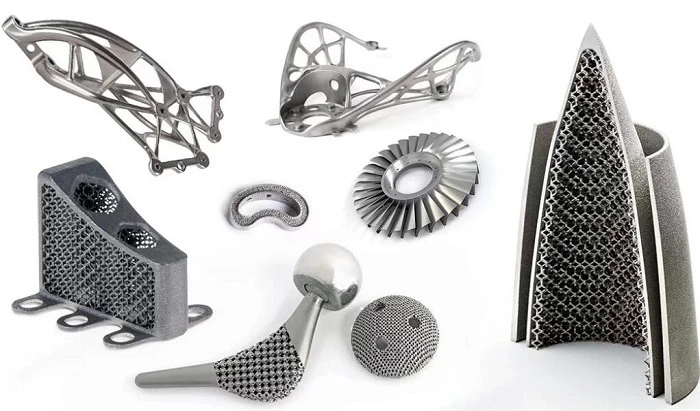
At present, the more common metal 3D printing materials include aluminum alloy, stainless steel, titanium, copper, silver, and alloys. Titanium alloys account for almost one-third of the metal 3D printing material market, and analysts predict that the market will grow at a rate of 32% over the next 10 years. Such predictions are not unfounded. Aviation giant GE has announced a $3.5 billion investment to produce 100,000 metal 3D-printed fuel nozzles, and Aram has said it plans to make 50,000 3D-printed orthopedic implants. Metal 3D printing is frequently used in the aerospace and automotive industries and has moved from initial prototype products to the stage where final products can now be produced directly.


Metal 3D printing needs to solve problems
The future development of metal 3D printing will greatly benefit from the cooperation between experts in various fields. Like polymer 3D printing, multidisciplinary cooperation can greatly advance the development of metal 3D printing. The closed and isolated model of knowledge stored in the past is outdated. While requiring individual specialization, practitioners must also reach a good agreement with other experts. partnership.
Education and promotion for consumers is another key to the future development of metal 3D printing - what kind of objects are suitable for additive manufacturing? Which ones are inappropriate? This requires a standard that includes an evaluation of the printed object, its size, shape, production scale, existing materials, etc. Metal 3D printing and other materials may require alternative business models and ways of organizing production resources. Behrokh Koshnevis, a professor at the University of Southern California, suggested that remote control could be the organizational model for manufacturers in the future. Producers are separated from traditional factories and equipment, and may even be located 100,000 miles away from this equipment. With remote control of equipment, workers are no longer tied to the factory and can do their jobs remotely. Such an organizational model has many benefits: on the one hand, it protects the health and safety of workers and increases the enthusiasm for participating in labor; on the other hand, it can reduce business expenses by locating factories in areas with relatively low real estate and energy costs.
Remote working can also be seen as a major trend in the future of Industry 4.0, especially when it comes to the development opportunities of decentralized enterprises. A variety of emerging technologies, such as the Internet of Things, big data, and automation, will drive the further application and promotion of metal 3D printing.