
The Technology Behind Automotive Iteration

HP Multi Jet Fusion is an industrial powder-bed process that produces functional polymer parts with near-isotropic mechanical properties. It is particularly well suited to the volume range most startups actually need-dozens to a few thousand pieces.
A thin layer of nylon powder (most commonly PA12) is spread across the build platform. Printheads jet fusing and detailing agents only where the part should solidify. Infrared lamps then melt those regions while the surrounding powder remains loose and acts as natural support. The platform lowers, another layer is applied, and the cycle continues until the geometry is complete.


Because the powder supports the part, internal channels, lattices, snap-fits and undercuts print without separate support structures. After the build, parts are cooled, unpacked and cleaned; they can then be dyed or vapor-smoothed. Unused powder is typically reusable at rates around 80 percent, which keeps material cost manageable.
Finished PA12 parts commonly deliver tensile strength in the mid-40s MPa range, consistent properties in all directions, good impact resistance and chemical stability suited to many brackets, housings, ducts and interior or exterior components.
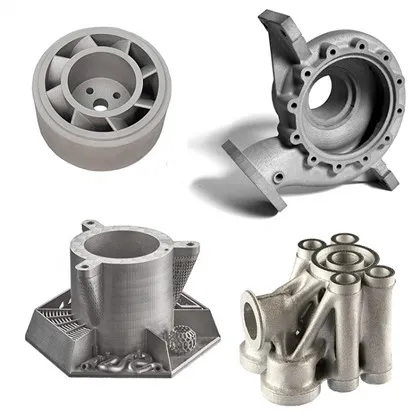
How MJF Compares with Injection Molding, SLA and FDM
Injection molding only becomes economical once the mold cost is spread across thousands of identical parts. Design changes require new tooling. SLA produces excellent surface detail but most resins lack the toughness required for functional automotive duty. FDM is accessible and inexpensive, yet the parts are anisotropic, show layer lines, and need support removal.
MJF avoids tooling, delivers isotropic nylon, handles complex geometry without supports, and remains cost-effective at low-to-medium volumes. That combination explains why more vehicle startups and small-batch automakers now use it for both functional prototypes and actual end-use production.
Where MJF 3D Printing Cuts Real Costs for Automotive Teams
Dundon Motorsports received a nearly $65,000 quote for an intake-runner mold. Switching to HP Jet Fusion PA12 let them print functional racing components in days to a week instead of waiting months, keep iterating while the car was already on the track, and expand their product line without the capital outlay of tooling.
The same economics show up repeatedly in low-volume work:
No mold investment means design changes cost only engineering time.
Minimum order quantities are essentially zero, matching the reality of low-volume automotive parts manufacturing and avoiding inventory risk.
Iteration speed reduces the number of expensive dead-end prototypes-especially valuable during rapid prototyping for car startups.
Parts can be produced on demand, eliminating the need to warehouse components while designs are still evolving.
Blazin Rods produced more than 75 functional MJF parts for a single custom high-performance vehicle. Waylon Jeffrey, 3D Design & Engineering Lead at Blazin Rods, noted that the combination of CAD and HP Multi Jet Fusion made it possible to engineer vehicles of that complexity and precision in under a year. On a larger scale, General Motors, working with HP and GKN Forecast 3D, produced and finished 60,000 closeout seals for popular SUV spoilers in five weeks-showing the process also scales when volumes increase.
When Strength Requirements Point Beyond Nylon
Standard MJF is a polymer process optimized for engineering nylons such as PA12. These materials cover a wide range of brackets, housings, ducts and many under-hood or exterior parts with a favorable strength-to-weight ratio.
When a component truly requires metal-level performance-high-load structural brackets, certain suspension elements or extreme motorsport applications-laser powder-bed fusion or similar metal processes are used instead. Titanium alloys are frequently chosen in those cases for their strength-to-weight ratio and corrosion resistance. Many full-service manufacturers run both polymer MJF and metal systems, allowing teams to source the right process for each part from a single partner.
Shop-Floor Results That Matter to Startups
The Dundon experience is typical of the startup and small-series problem: complex geometry, low expected volume, and mold quotes that would consume a large share of the budget. MJF removed the tooling barrier and compressed development from quarters to days.
Blazin Rods applied the same approach across dozens of parts on a fully custom build, using the mechanical consistency of PA12 and the speed of the process to stay on an aggressive timeline. Larger programs such as the GM seal project demonstrate that once a design is validated, the same technology can move into higher-volume production without changing the fundamental workflow.
When MJF Makes Sense for Your Project
MJF is usually a strong practical choice when you need functional nylon parts or prototypes that must survive real vehicle testing, volumes sit in the low-to-medium range, designs are still changing frequently, complex geometry or weight reduction is important, and avoiding mold cost plus excess inventory is a priority.
It becomes less attractive when stable high volumes make amortized tooling clearly cheaper, the part requires metals or temperature performance outside current PA12 capabilities, or cosmetic and dimensional requirements exceed what post-processed MJF can deliver (vapor smoothing and dyeing close the gap for many applications).
Selecting an MJF Partner That Delivers
Four practical checks matter most:
Access to genuine HP-compatible PA12 with published mechanical data and high powder reusability
In-house or reliable post-processing (powder removal, media blasting, dyeing, vapor smoothing, inserts, inspection)
Transparent lead times and capacity for both prototypes and small production runs
Relevant automotive or industrial experience plus clear process controls
A capable partner will also review the design for printability so geometry, strength and cost stay aligned.
FAQ
Q: We're looking at 50–200 brackets or duct parts-how does the MJF cost stack up against getting a mold cut?
A: At those quantities the MJF route is nearly always lower because there is no tooling. Once volumes move into the several-thousand range and the design is frozen, injection molding can become more economical. Most service providers will quote both options side by side for the same geometry.
Q: Can PA12 MJF parts actually stay on a car as brackets, housings or interior components?
A: In the majority of those roles, yes. The material offers solid tensile strength, near-isotropic behavior, good impact resistance and resistance to moisture and many automotive fluids. Teams still validate against their specific load, temperature and vibration profiles, but many prototype and production parts already run successfully in those applications-especially in rapid prototyping for car startups and low-volume automotive parts manufacturing.
Q: A few of our components need higher strength-can the same shop also print titanium?
A: Polymer MJF systems print nylons. Titanium and other metals are produced on metal additive machines. Many manufacturers operate both technologies, so the polymer and metal parts can be sourced together.
Q: How long does it usually take to get a first set of automotive prototypes?
A: Standard PA12 parts with basic finishing often ship in a few days to about a week after the file is approved. Larger batches or extensive finishing add a little time.
Getting Started
Send a few representative CAD files to an experienced MJF partner. Most will return a clear cost comparison against tooling, a short design-for-printability note, and the option to order sample parts for physical testing. That single exchange usually shows whether the process fits the current volumes and timeline-and how much capital and calendar time it can free up for the next design iteration.