

Yo, what's up everyone! As a supplier of MJF 3D printing, I get asked a ton about how accurate this technology really is. So, I thought I'd sit down and break it all down for you in this blog post.
First off, let's talk about what MJF 3D printing is. Multi Jet Fusion (MJF) is a 3D printing process developed by HP. It's a powder - bed fusion technology, which means it uses a fine powder material (usually nylon like PA12) and selectively fuses it layer by layer to create a three - dimensional object.
One of the big claims about MJF 3D printing is its high accuracy. In my experience, it's pretty spot - on for the most part. The precision of the machines is such that they can create parts with very fine details. You can get features like thin walls, small holes, and intricate geometries that other 3D printing methods might struggle with.
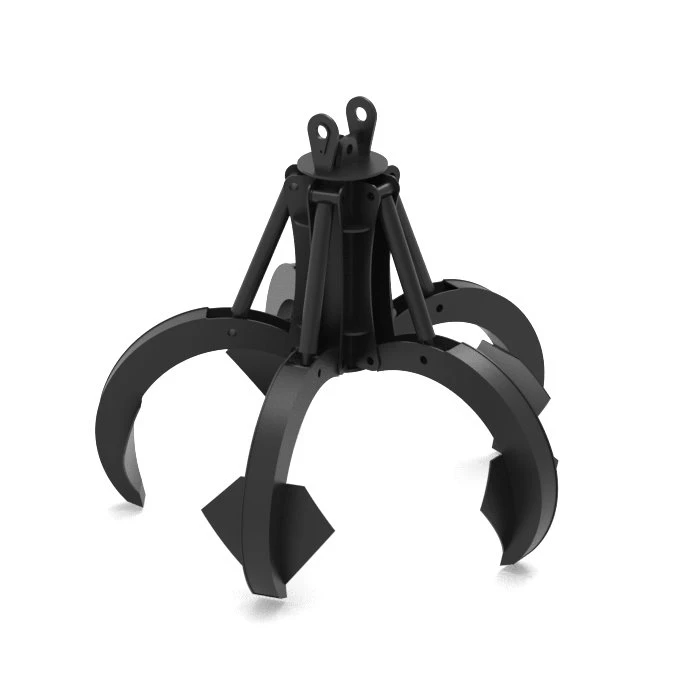

For instance, in the consumer industry, we've used MJF 3D printing to create TPU products. You can check out more about MJF 3D Printing TPU Products In The Consumer Industry. These products require a high level of accuracy, especially when it comes to fit and finish. TPU is a flexible material, and MJF can print it with a good degree of precision, allowing for snug fits and smooth surfaces in things like wearable devices or small consumer goods.
The accuracy of MJF also shines when it comes to complex mechanical parts. We've worked on an MJF 3D Printing Integrated Mechanical Robot Arm. This robot arm needs to have exact dimensions and smooth joints to function properly. MJF printing was able to create parts with the required tight tolerances, ensuring that all the components fit together seamlessly and the arm could move with precision.
Now, let's talk about tolerances. Tolerance is a measure of how much a part's actual dimensions can deviate from the intended ones. For MJF 3D printing, we can generally achieve tolerances in the range of ± 0.1 mm to ± 0.5 mm, depending on the size and geometry of the part. Smaller parts tend to have better tolerances, while larger parts may have a bit more variation.
But here's the thing, accuracy isn't just about the machine. It also depends on the material. PA12, for example, is a common material used in MJF. We've used it to print car manifolds. You can see more about PA12 Car Manifold By 3D Printing. PA12 has good dimensional stability, which means that once it's printed, it doesn't warp or shrink too much. This helps in maintaining the accuracy of the final part.
On the other hand, there are some factors that can affect the accuracy of MJF 3D printing. One of them is the build orientation. If a part is printed in the wrong orientation, it can lead to issues like uneven layer adhesion or support - related problems. This can then cause deviations in the final dimensions.
Another factor is post - processing. Sometimes, after printing, a part may need some post - processing steps like sanding or coating. These steps need to be done carefully because if not, they can affect the overall accuracy of the part.
In my opinion, MJF 3D printing is one of the most accurate 3D printing technologies out there, especially for functional parts. It's reliable for creating parts that need to fit together, move smoothly, or have specific mechanical properties.
If you're in need of high - accuracy 3D printed parts, whether it's for the consumer industry, mechanical applications, or automotive parts, I'd highly recommend giving MJF 3D printing a try. And as a supplier, I'm here to help you with all your printing needs. If you're interested in learning more or want to discuss a project, feel free to reach out and we can start a conversation about how we can work together to get the best results for your parts.
References:
- General knowledge from working as an MJF 3D printing supplier.
- Insights from various MJF 3D printing industry reports.