

As a supplier in the metal additive manufacturing industry, I've seen firsthand the tremendous potential and allure of this technology for producing large - scale parts. But let me tell you, it's not all smooth sailing. There are several significant challenges that come with using metal additive manufacturing for big - sized components, and I'm here to spill the beans on those.
1. Material Limitations
One of the first roadblocks we face is material limitations. When dealing with large - scale parts, the material needs to meet strict requirements in terms of strength, durability, and heat resistance. While there is a wide range of metal powders available for additive manufacturing, not all of them are suitable for large models.
For instance, some high - strength alloys might be difficult to print in large quantities because they have a tendency to crack during the printing process. The rapid heating and cooling cycles in additive manufacturing can create internal stresses, and in large parts, these stresses can lead to defects. We've had situations where we were working on a large Aluminium Heatsink By 3D Additive Manufacturing, and despite our best efforts to optimize the process, we still encountered some cracking issues.

Another problem is the cost of materials. High - performance metal powders can be quite expensive, and when you're talking about large - scale parts, you need a significant amount of material. This drives up the overall production cost, which can be a deterrent for many customers.
2. Build Size and Constraints
The build size of additive manufacturing machines is a major constraint. Most commercial 3D metal printers have limited build envelopes, which means that creating large - scale parts in one piece is often not possible. This forces us to print large components in smaller sections and then assemble them later.
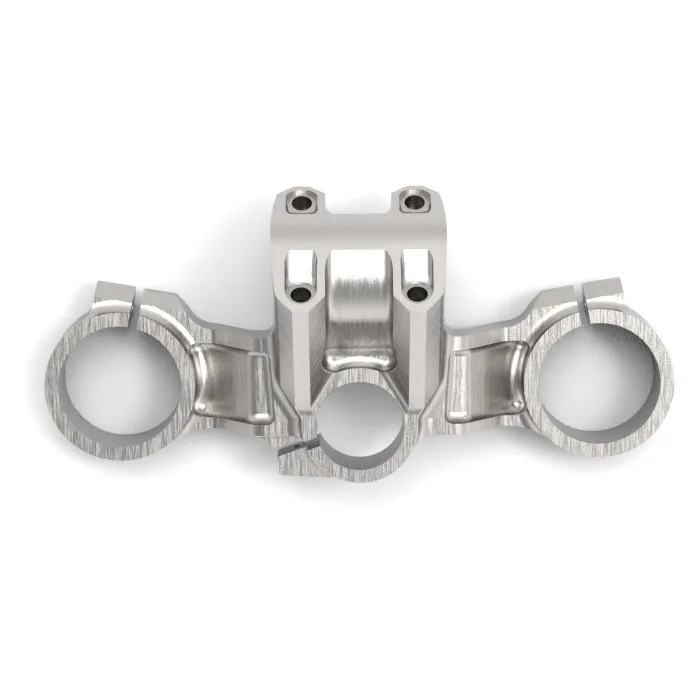
Assembling these printed sections comes with its own set of problems. Ensuring a strong and seamless connection between the individual parts can be tricky. Any misalignment or weak joint can compromise the integrity of the entire part. For example, when working on Aluminum 3D Printing Bicycle Products, which require a certain level of precision and strength, the assembly process can be a real headache.
Moreover, the printing time increases exponentially as the size of the part grows. Printing a large - scale part can take days or even weeks, which is not very efficient for mass production or when there are tight project deadlines.
3. Quality Control
Quality control is a crucial aspect of any manufacturing process, and it becomes even more challenging when dealing with large - scale metal additive manufacturing. Inspecting the internal structure of a large part for defects such as porosity, cracks, or incomplete fusion is no easy feat.
Traditional non - destructive testing methods like X - ray and ultrasound can be effective to some extent, but they have limitations when it comes to large and complex parts. The depth and size of the part can make it difficult to get a clear picture of what's going on inside. We need to invest in advanced inspection equipment and techniques to ensure the quality of our large - scale 3D printed parts.
In addition, variations in the printing process, such as changes in temperature, powder flow, or laser power, can affect the quality of the final product. Maintaining consistent quality across large parts requires a high level of process control, which is easier said than done.
4. Post - Processing Requirements
Large - scale metal additive manufactured parts often require extensive post - processing. After printing, the parts need to be removed from the build platform, and any support structures need to be removed. This can be a time - consuming and labor - intensive process, especially for large and complex parts.
Heat treatment is another common post - processing step. It helps to relieve internal stresses and improve the mechanical properties of the part. However, heat treating large parts can be challenging because it requires specialized equipment and careful control of the heating and cooling rates. If not done correctly, heat treatment can cause warping or other defects in the part.
Surface finishing is also important, especially if the part has aesthetic or functional requirements. Large parts can be difficult to finish uniformly, and achieving the desired surface quality can be a struggle.
5. Design Complexity and Optimization
Designing large - scale parts for additive manufacturing is a whole different ballgame compared to traditional manufacturing methods. The freedom of design that additive manufacturing offers is both a blessing and a curse. On one hand, we can create complex geometries that were previously impossible to manufacture. On the other hand, designing these complex parts requires a deep understanding of the additive manufacturing process.
For example, when designing a large Additive Manufacturing Of Aircraft Engine Stand, we need to consider factors such as support structures, material distribution, and the orientation of the part during printing. A poorly designed part can lead to issues such as excessive support material, longer printing times, or even failed prints.
Optimizing the design for large - scale additive manufacturing also involves balancing the need for strength and weight. While additive manufacturing allows us to create lightweight structures, ensuring that these structures can withstand the required loads is crucial.
6. Regulatory and Certification Hurdles
In industries such as aerospace, automotive, and medical, large - scale metal additive manufactured parts need to meet strict regulatory and certification requirements. These requirements are in place to ensure the safety and reliability of the parts.
Obtaining the necessary certifications can be a long and expensive process. It often involves extensive testing, documentation, and audits. For a small - to - medium - sized metal additive manufacturing supplier like us, navigating through these regulatory hoops can be a significant challenge.
In addition, the regulatory environment for additive manufacturing is still evolving, which means that the requirements can change over time. Staying up - to - date with these changes and ensuring compliance with the latest regulations is a constant struggle.
Despite all these challenges, the future of using metal additive manufacturing for large - scale parts looks promising. The technology is constantly evolving, and new solutions are being developed to overcome these obstacles. We're committed to pushing the boundaries of what's possible and providing our customers with high - quality, large - scale 3D printed metal parts.
If you're interested in exploring the possibilities of metal additive manufacturing for your large - scale projects, we'd love to have a chat with you. Whether you're in the aerospace, automotive, or any other industry, we have the expertise and experience to help you navigate through these challenges and achieve your goals. Reach out to us for a procurement discussion, and let's work together to bring your ideas to life.
References
- Gibson, I., Rosen, D. W., & Stucker, B. (2015). Additive Manufacturing Technologies: 3D Printing, Rapid Prototyping, and Direct Digital Manufacturing. Springer.
- Wohlers, T. (2020). Wohlers Report 2020: 3D Printing and Additive Manufacturing State of the Industry. Wohlers Associates.